How to Build Your Hybrid Workplace Strategy
A hybrid workplace strategy is a flexible operational model that blends remote work with an intentional in-office presence, engineered specifically to support an organisation’s unique cultural and commercial objectives. Rather than relying on rigid, policy-driven attendance mandates that often cause friction, a successful hybrid strategy treats the physical office as an active tool for human performance, collaboration, and collective energy.
The first step to building this strategy is reviewing your current setup. When leadership teams complete an audit, the results show the exact gap between how employees behave and how the company uses its real estate. The real challenge is turning that audit score into clear, board-ready operational steps before upcoming lease renewals force your hand.
Haven’t audited your hybrid workplace model? Download our Return to Office Playbook to complete the five-question Executive Audit and find out which tier your organisation sits in before reading on.
Once you have your audit score, read the section below that matches your tier to find your next tactical steps.
Tier 1: Optimising Your Existing Hybrid Workplace Strategy
Your results show that your leadership behaviour and real estate are aligned.
Organisations at the highest tier run a fully data-led hybrid workplace strategy. Office attendance is voluntary and driven by culture. The physical workplace supports high performance, using dynamic team zones that eliminate daily frustrations like noise disruptions and poor technology.
At this stage, your work shifts from fixing spaces to continuously improving your property portfolio. The goal is to lock in these positive behaviours so future lease decisions reflect actual usage data rather than headcount guesses. Keeping this alignment requires regular activity audits to balance collaborative spaces and quiet focus areas as teams change.
Your Next Steps:
- Schedule regular spatial usage audits to track changing team needs.
- Use actual daily occupancy data, combined with headcount projections, to plan your next lease event.
Tier 2: Removing Friction from Your Hybrid Workplace Strategy
Your results show that your workplace relies on rules rather than desires.
A significant share of Australian businesses sit in this middle tier, where the workplace runs on policy-first friction. Attendance relies heavily on administrative pressure, exposing the business to heightened turnover risk and underutilised asset costs. Hassell and Density’s research across 14 million square feet of tech workplace found that tightening a flexible policy into a mandatory three-day mandate lifted peak daily utilisation by only 17 percentage points. The physical environment hadn’t changed. The mandate alone couldn’t close the gap, and real estate still sat empty on Mondays while meeting rooms gridlocked mid-week.
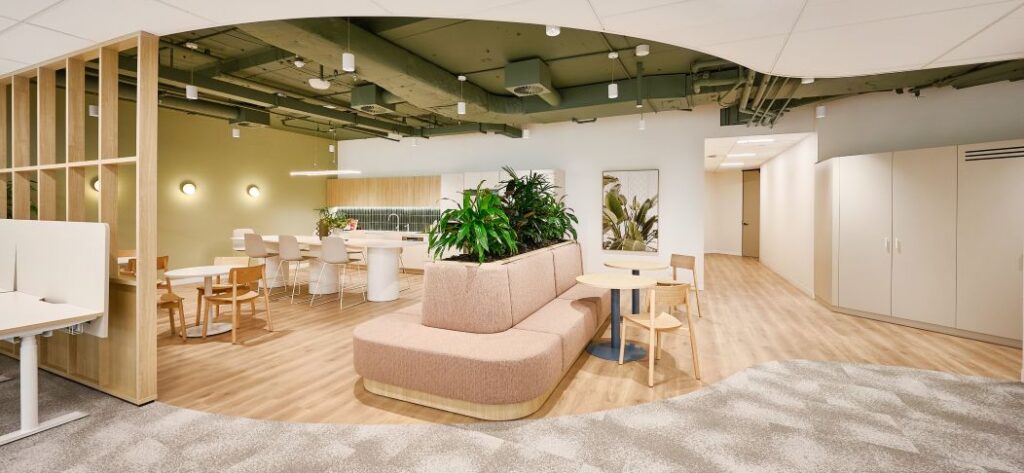
Moving away from this friction could mean switching from assigned desks to structured team neighbourhoods. For personalised guidance on how this applies to your business, schedule a call with our strategy team
Step 1: Persona Modelling and Journey Mapping
Group your employees by how they actually work rather than by their job titles. For example:
Technicians: They spend about 90% of their day working directly at their desk. They focus on highly task-orientated singular work and creating things. Because they are at their desk most of the day, they should not be placed in/near collaborative zones. Some example roles would include IT workers, engineers, and content creators.
Collaborators: They split their time evenly, spending roughly 50% of the day at their desk and 50% in meetings. They are responsible for directing workflows and keeping projects moving, which requires them to constantly shift between independent tasks at their desk and collaborative discussions. Example roles would often include middle managers and team leads.
Mobile Professionals: They are rarely at an office desk, spending only about 30% of their day inside the building. Their primary responsibilities require them to be out on the move, visiting external locations and working directly with people outside the main office. Example roles could include sales representatives, site managers and mobile health workers.
It’s important to understand that every organisation has its own unique personas; these are general categories that apply across a number of industries.
Journey mapping then follows a persona through an actual working day, from deciding whether to come in, through arrival, into collaboration, and back out again, and it’s this step that surfaces where the experience genuinely breaks down: a desk booked but the meeting room audio fails, a floor with no quiet space for the persona that needs deep focus. Those are the real friction points, and they rarely show up on an org chart.
Step 2: Leadership Alignment
Leadership alignment and visioning development addresses the other half of the equation. These sessions assess the current gap between how leadership says the business works and how it actually operates, define what the office is genuinely for, and set explicit rules of engagement such as anchor days, core hours and meeting norms so departments stop running on conflicting unwritten rules. Just as important, they shift how leadership measures success, from monitoring who showed up to managing by the outcomes that attendance is supposed to produce, and they make clear that leaders are expected to model the behaviour themselves rather than default to remote work while expecting junior staff to attend. Put the neighbourhood model and this alignment together and attendance stops needing to be policed, because the space and the leadership around it are finally pointing the same direction.
Tier 3: Rebuilding a Failing Hybrid Workplace Strategy
Your results show severe risks and mismatched space.
The lowest tier requires immediate action. Your physical office and corporate policies clash directly with how your people work. This creates major financial risk ahead of future lease renewals. People in these environments experience spatial monotony and digital isolation, and that drives a talent drain that shows up on the financial statements before it shows up in an exit interview.
Your Strategy:
Gather real usage data: Use independent spatial audits instead of unreliable building swipe-card metrics.
Run stay-versus-go modelling: Test your current lease against new property options under strict financial scrutiny. Calculate the full multi-year cost of staying against the total cost of moving, including fit-outs, business downtime, and productivity impacts.
Consolidate your space: Use project budgeting and scenario modelling to right-size your property portfolio. This gives your board clear paths forward with distinct trade-offs, replacing gut-feel decisions with evidence.
The Takeaway
Translating diagnostic insights into defensible property roadmaps
A diagnostic score is a valuable benchmark, but it remains static without a structured execution strategy. PMG’s workplace strategy practice helps business leaders bridge the gap between behavioural data and the built environment, ensuring your physical footprint directly advances your broader commercial goals. By conducting comprehensive occupancy analysis and structured executive workshops, we provide the empirical data required to make defensible real estate decisions that protect your culture and capital. We know your people are doing this alongside their day jobs and need clear answers to the questions in front of them. We’re here to make the process easy, add real value, and push your thinking so the right decisions become obvious.
No over-complicated, overwhelming levels of engagement and workshops. No unnecessarily extensive report and the fees that follow. Realistic, outcome-led, and grounded in what works.
Ready to turn your audit results into a clear strategy? Contact our workplace strategy team today to discuss your next steps.
Frequently Asked Questions
What are the primary indicators of policy-first friction in a hybrid model?
Policy-first friction is characterised by unpredictable office occupancy, high resistance to mandatory attendance, and severe meeting room gridlock on mid-week peak days. It occurs when organisations attempt to fix an uninspiring physical environment with strict administrative rules.
How does a neighbourhood-based workplace strategy resolve hybrid operational friction?
A neighbourhood-based framework replaces rigid, assigned desks with flexible team zones that combine collaborative tables, quiet focus booths, and shared social areas. This layout guarantees team proximity and supports organic mentoring, let’s the workplace respond to how daily activity shifts.
When should an organisation begin planning a hybrid workplace strategy intervention?
The ideal timeline for strategic intervention is 12 to 36 months before a major lease expiry or footprint consolidation. Beginning the diagnostic process early ensures executive teams have the scenario modelling and occupancy data required to negotiate defensible real estate outcomes.
Why do traditional swipe-card metrics fail to inform effective real estate decisions?
Swipe-card data only confirms if an employee entered a building, failing to track how they utilised the space or where operational bottlenecks occur. Additionally, data only represents past behaviour, and behaviour that is driven by existing facilities, not necessarily allowing people to use spaces in the way that best works for them. High-performance planning requires activity-based tracking to identify if square meterage matches actual working patterns.
How does PMG help corporate occupiers move from diagnosis to execution?
By translating behavioural data into board-approved design guidelines and portfolio reviews. PMG aligns executive leadership, runs the occupancy audits, and delivers the spatial planning needed to right-size a commercial footprint with evidence behind every decision.