What Is Biophilia, and Why Does It Matter in Workplace Design?
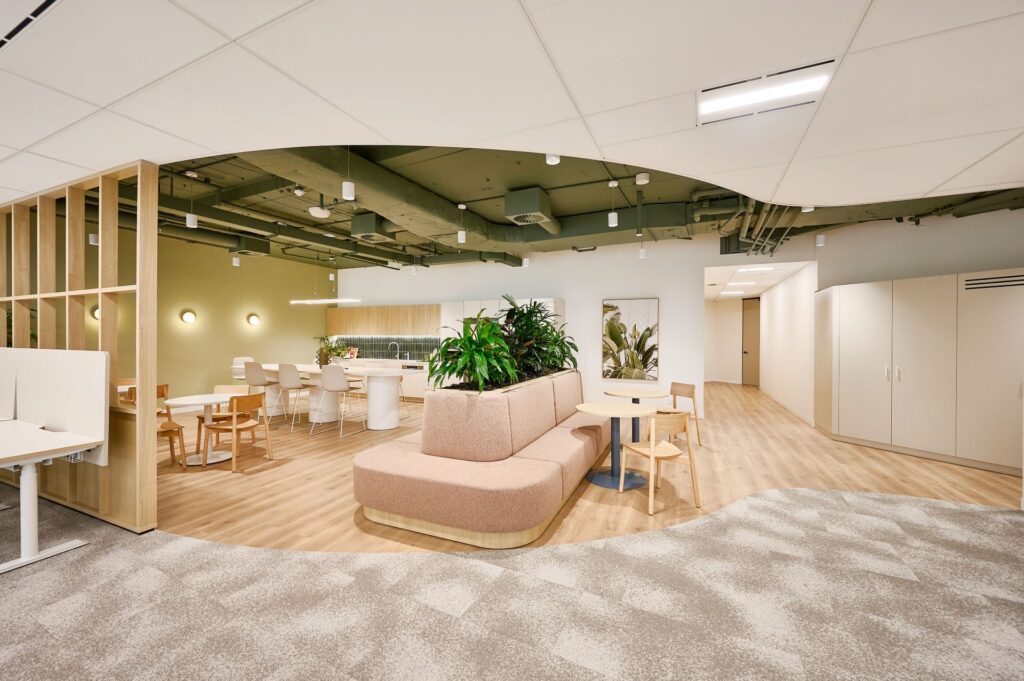
A handful of pot plants dotted around a breakout area gets called biophilic design more often than it should. The real practice is broader and better evidenced than that, and the difference between the two usually shows up as whether an office only photographs well or measurably changes how people feel working in it.
What is biophilic design?
Biophilic design is the practice of building a human-nature connection into an interior through five core elements: natural light, greenery, natural materials and textures, views to the outdoors, and airflow or air quality. Plants are the most visible of the five and the easiest to add after the fact, which is why they get treated as the whole discipline instead of just one piece of it. A workplace with excellent natural light and fresh air but no greenery is doing more biophilic work than one with a wall of plants sitting under fluorescent lighting with no openable windows nearby. Light alone varies enough by city to change the brief: an office fitout in Brisbane starts with strong, consistent daylight most of the year, while a Melbourne office fitout has to plan around a much greyer winter, and the biophilic strategy for each building looks different as a result.
The WELL Building Standard treats biophilia this way too, requiring projects to develop a biophilia framework across historical, cultural and ecological context. That’s a useful reference point for how the discipline is meant to work: evidence and framework first, decoration second.
Does biophilic design move the numbers?
The clearest test of biophilic design is a building whose outcomes get tracked over years. A repeated cross-sectional study of a UK biophilic office, The Enterprise Centre, followed the same workers across two years and recorded productivity gains of 12.98 percent in the first year and 9.17 percent in the second, alongside sustained improvements in reported health, wellbeing and indoor environmental quality. Two consecutive years of gains carries more weight than the single post-occupancy survey most studies in this field settle for.
Australia has its own version of that evidence base. Lendlease’s Barangaroo headquarters installed a six-metre breathing wall built by Sydney green wall specialist Junglefy, and a two-year study by University of Technology Sydney researchers recorded it removing over 24 litres of carbon dioxide from the air every hour, the highest rate recorded in the scientific literature at the time. That’s a mechanical, air-quality result backed by an external university study instead of a self-reported wellbeing score, which makes it easier to hold a supplier accountable for the same outcome elsewhere.
Ready to use biophilic design to drive lasting cultural change in your workplace?
What’s realistic biophilia inside a standard lease
A locked-in building still leaves plenty for a Workplace Strategy brief to shape: greenery, materials, layout and airflow, the elements a lease permits a tenant to control directly. When the building itself is still open for selection, natural light and orientation belong on the same shortlist as rent and location, since a floor plate with strong daylight built in outperforms one relying on artificial compensation later.
Full-surface green walls dominated biophilic design specs a few years ago. Distributed potted plants, low planter boxes and clear window sightlines now deliver the same benefit at a fraction of the maintenance cost, placed directly at desks and along walkways where people spend their day. A 2023 field study across multiple Dutch organisations, published in Frontiers in Psychology, found distributed indoor greenery lifted perceived workplace attractiveness and cut health-related complaints among office workers.
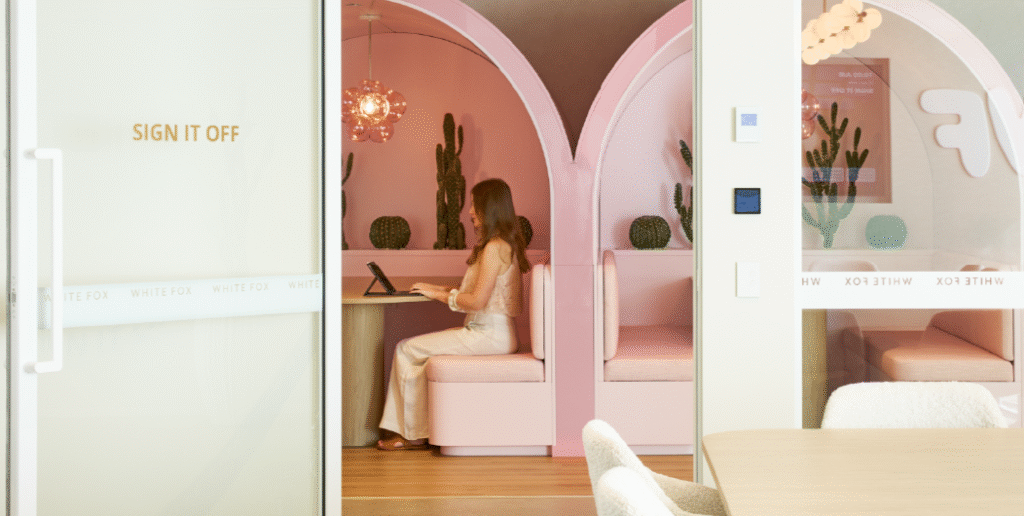
Terrapin Bright Green’s 14 Patterns of Biophilic Design framework, now in its 2024 tenth-anniversary edition, splits biophilic elements into direct components like plants and light and spatial patterns such as Prospect and Refuge. Refuge, a partially enclosed setting shielded from behind and overhead, links in the underlying research to improved concentration and attention, which suits a focus zone directly. Prospect, an open, unimpeded view across distance, links to reduced stress and fatigue, and suits a collaboration or social zone built for openness. A window treatment or planting decision earns its place differently depending on which of the two conditions it sits inside.
Where this fits inside a broader workplace strategy
Biophilia sits inside Workplace Strategy as one lever among several, alongside movement, connection, brand, focus, nourishment and technology. It shapes employee experience directly, and PMG’s Guide to Workplace Experience sets out how to apply it in practice. The small actions available within this lever can have an outsized effect on the workplace and on performance.
Frequently asked questions
What are the 9 values of biophilia?
Stephen Kellert’s typology identifies nine values people attach to nature: utilitarian, naturalistic, ecologistic-scientific, aesthetic, symbolic, humanistic, moralistic, dominionistic and negativistic, developed alongside Edward O. Wilson’s original biophilia hypothesis.
What is biophilic design?
Biophilic design is the practice of building a human-nature connection into the built environment through natural light, greenery, natural materials, views and air quality, based on research into how these elements affect health and wellbeing.
What is the biophilia hypothesis?
The biophilia hypothesis, developed by Edward O. Wilson, holds that humans carry an innate, evolved need to connect with nature and other living systems, a need shaped by millions of years spent in natural environments long before built ones existed.
What are examples of biophilic design in offices?
Common examples include distributed potted plants and planter boxes, unobstructed window sightlines, natural materials such as timber and stone, dynamic lighting that mimics daylight changes, and layouts that separate open, prospect-style areas from smaller, refuge-style spaces.
Does biophilic design improve productivity?
Research on biophilic buildings tracked over multiple years has recorded productivity gains close to 13 percent in the first year, alongside sustained improvements in wellbeing and indoor environmental quality.
Can biophilic design work within a standard office lease?
Yes, tenant-controllable elements like greenery, natural materials and airflow improvements can be implemented within most fitout scopes, even where a base building’s structure limits changes to light and orientation.