What Are Workplace Retention Strategies, and How Does Space Play a Role?
Average tenure keeps shrinking, and pay rises alone haven’t slowed it down. What increasingly decides whether someone stays past the first year or two has less to do with the offer letter and more to do with what the workplace itself says about the organisation they’ve joined.
What counts as a retention strategy, and where space fits
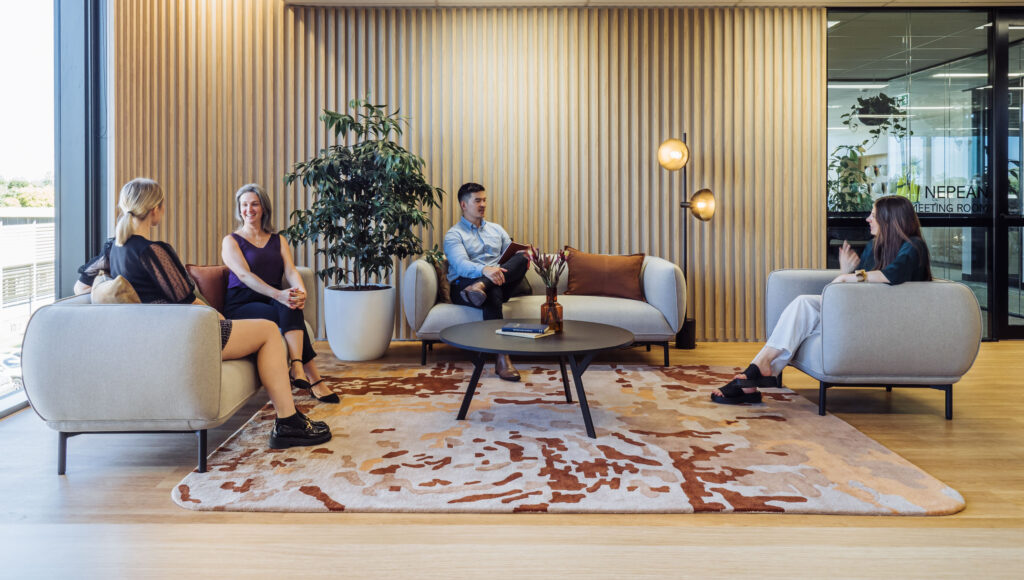
Retention strategies typically cover pay benchmarking, career pathways, flexible work policy and recognition programs, the traditional territory of a People and Culture team. AHRI’s Quarterly Australian Work Outlook found the leading reasons Australian employees leave a role are excessive workload, an unattractive role, poor workplace relationships and too few learning and development opportunities. Each of those has a physical dimension. A dedicated focus room gives someone facing a heavy workload somewhere to work through it without the constant interruption an open desk invites. A breakout space built for informal conversation, instead of another bookable meeting room, is where a stalled working relationship most often gets repaired, and where a newer starter picks up the kind of casual visibility that never comes from a scheduled catch-up alone.
Pay and policy operate at the organisational level, reviewed annually or renegotiated once a year at most. Space operates daily, and it’s in that daily experience that the decision to stay or leave quietly forms, long before anyone hands in notice.
How the workplace itself supports retention
A workplace built around how a team works, instead of a generic floor plan, gives people a reason to be there beyond obligation. Workplace Strategy treats this as a specific, addressable output: identifying the spatial and organisational conditions that build team cohesion, increase office attendance, and create an environment people choose over one they simply tolerate.
A 2022 study in Frontiers in Psychology found a supportive work environment strongly predicts employee retention across multiple sectors and studies, working through organisational commitment. People who feel supported by their surroundings commit more strongly to the organisation, and that commitment is what keeps them from leaving.
How do you build a workplace your people commit to?
5 generations, with different reasons to stay
Most Australian workplaces now run five generations deep, from the last Baby Boomers still working past traditional retirement age through to the earliest Gen Z employees settling into their second or third role. Each weighs a different set of factors when deciding whether to stay. Gen Z’s average job tenure in Australia sits at around one year and eight months, against a global figure closer to 1.8 years for Millennials and 2.8 for Gen X, a difference wide enough that a retention plan built for one generation can miss the others almost entirely. A single generic office was never built to hold five different sets of expectations at once, which is exactly why the workplace itself is one of the few levers flexible enough to hold onto more than one generation simultaneously.
In practice
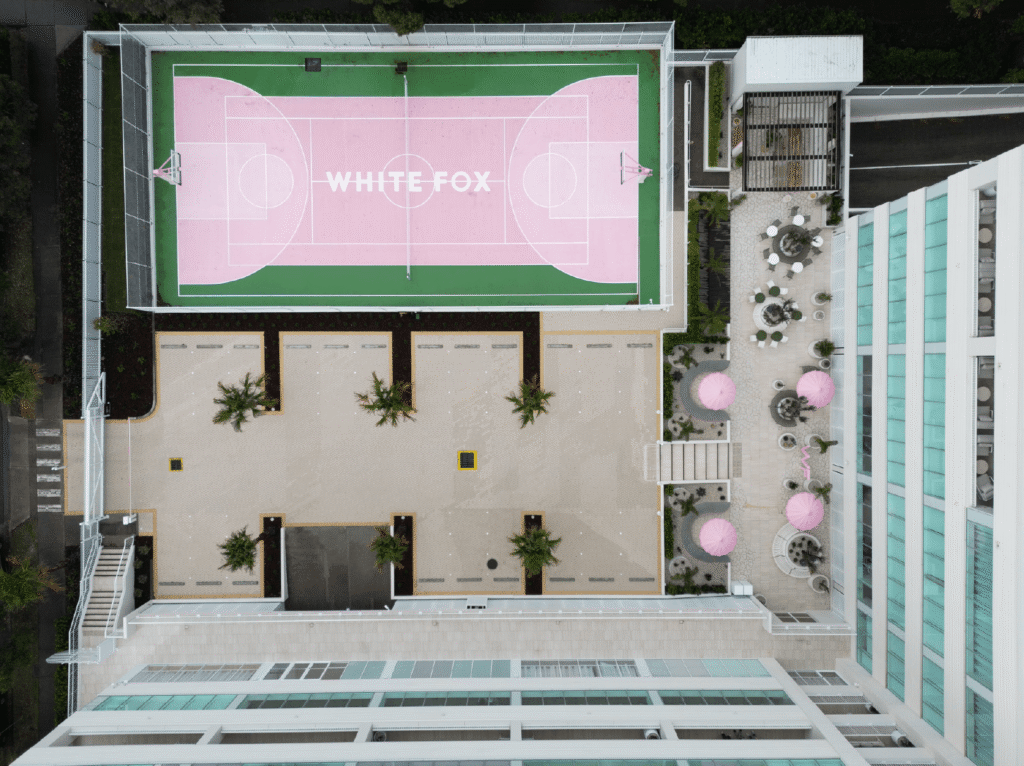
PMG’s White Fox HQ project, a headquarters workplace transformation delivered for the fashion brand in Sydney, is a useful test case. White Fox staff work in the office five days a week, by the nature of the business, with no hybrid arrangement to fall back on. That’s the exact condition most retention advice treats as a risk. In practice, staff are keen to be there, and the complaints that condition would typically produce haven’t materialised.
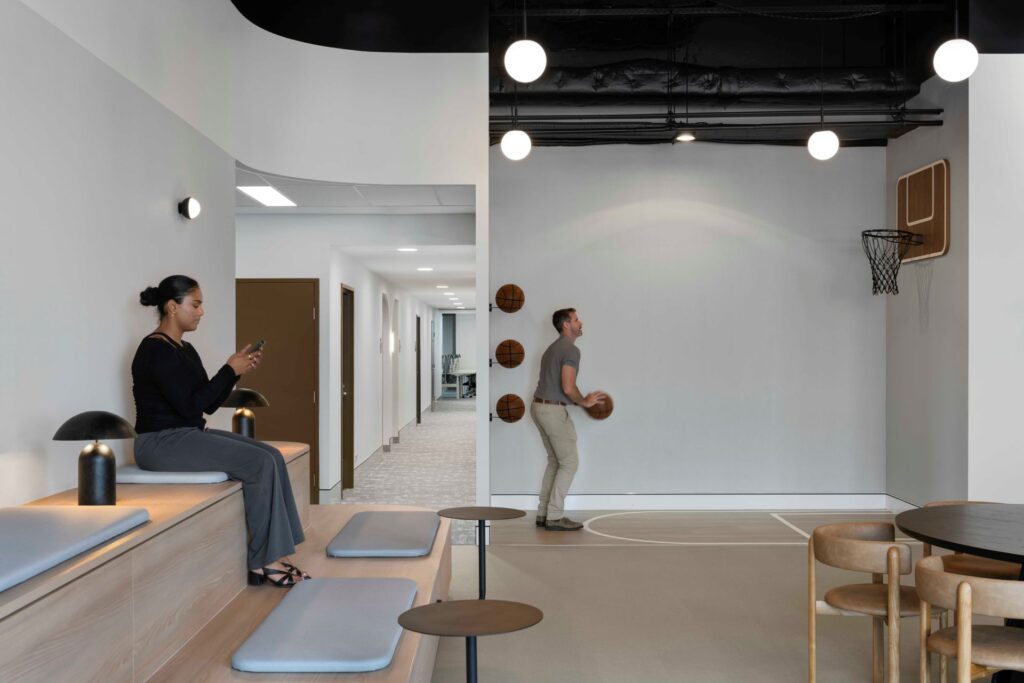
The building explains part of it. A gym, Pilates studio, saunas and a basketball court are proof, walked into every day, of the same brand identity White Fox sells to its customers. But the facilities are only half the story. Career progression and mentorship at White Fox happen inside that same space, day to day, because leadership shows up in it themselves: the same breakfasts, the same Pilates sessions, the same building, using that shared presence to run the mentoring conversations and progression discussions a younger workforce is explicitly looking for. That’s what leader-led behaviour means in practice, embodying the brand and its values in person.
As Anika Meza, White Fox’s Head of People and Culture, has said: “The impact on our team was immediate. The space has completely changed how people experience White Fox from the moment they walk in. It’s become a huge advantage for attracting great talent and creating an environment people genuinely want to be part of long term.”
White Fox’s retention record with a historically short-tenured generation comes from understanding specifically what its own workforce needed out of the building: mentorship, visible progression, leadership that shows up, and facilities built for how they want to spend a working day, then building all of it in one place.
The office is one of the few retention levers competitors can’t simply match
Salary bands get benchmarked. Perks get copied within a quarter. A workplace built around what a specific team values, and led by people who show up in it, is far harder to replicate, which is exactly what makes it worth building deliberately.
Frequently asked questions
What are workplace retention strategies?
Workplace retention strategies are the combined set of pay, policy, culture and physical environment decisions an organisation makes to keep employees from leaving, spanning People and Culture programs through to the design of the office itself.
How does office design affect staff retention?
Office design affects retention by shaping day-to-day experience, including how manageable a heavy workload feels and how connected a team stays, both factors research links to organisational commitment and lower turnover intention.
Why is retention harder for Gen Z employees specifically?
Gen Z’s average tenure in Australia is around one year and eight months, shorter than any prior generation, driven by high expectations around career progression, mentorship and workplace values alignment rather than disloyalty.
Is a good workplace enough to retain staff without flexibility?
Not fully, but it’s a genuine lever. PMG’s White Fox HQ project shows a fully in-office team can stay satisfied when the workplace experience and leadership presence both support it.