The Value Shift: Inside CoreNet Global Australia's 2026 Sydney Conference
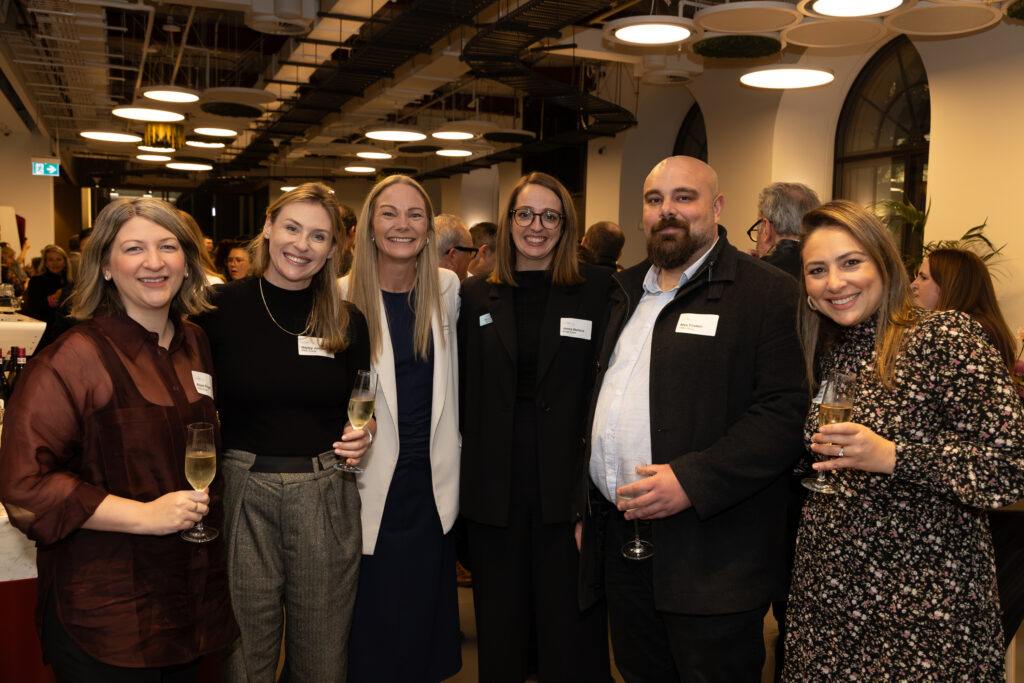
At the CoreNet Global Australia Chapter’s 2026 conference in Sydney, 330 people and 137 organisations gathered under one theme: The Value Shift. Throughout the day, a single underlying truth surfaced across every presentation: the industry has spent decades relying on top-line metrics that obscure what truly drives value. Standard measurements (price, vacancy, utilisation, attendance) miss the human and spatial detail that decides whether a deal, a building or a team succeeds.
Value is felt before it is justified
Cian McLoughlin opened the day with a session called “The Value Conversation: Influence, Storytelling and Decision-Making”. His core claim: people decide with their hearts and build the rational case afterwards. Value, he argued, is always filtered through human experience, shaped by what people feel long before logic gets a say. Price and product might earn a place on the shortlist, but people and purpose are what get a brand picked.
To make the point land, McLoughlin ran an old trick, a roadside-antiques exercise borrowed from a treasure-hunting television format. He passed two objects around the room, a generic-looking globe and a small replica of a Taipei landmark, and asked the audience to price them. Numbers floated around, twenty dollars, a hundred, until someone called out priceless. McLoughlin then put two photos on the screen: his own children, adopted from overseas as toddlers. The objects being passed around were among the only items that had travelled with them from their birth families. Market value, near zero. Personal value, immeasurable. He tied it back to the day job from there: value is created through meaning, and stories are the mechanism humans use to attach meaning to objects, decisions and brands alike.
For workplace and real estate teams, the practical takeaway sat in how discovery gets done. Look past the stated brief. Ask what a client is protecting. Observe closely, ask better questions, and resist the urge to assume you already know the answer before someone gives it to you.
The layer AI skips over
Dr Claire Mason, a researcher with CSIRO, took the value question into AI territory. Her focus was metacognition: the ability to step outside your own thinking and examine it. AI can extend the work, drafting, summarising and pattern-matching at real speed. What it skips is the moment of standing back and asking whether the output holds up, whether bias baked into a model or a prompt shaped the answer, and whether the result fits the actual problem in front of you.
For an industry weighing how far to lean on generative tools in client work, design and reporting, the framing lands cleanly: AI augments human intelligence, it doesn’t replace it, and the layer of judgement sitting on top of any AI output is the one place value still gets made by a person.
The Myth of Headline Vacancy
Dr Dominic Brown brought the economic weight of the day. Building costs have climbed faster than inflation for years running, and that gap makes new development an increasingly hard sum to justify. The pipeline of new supply is thinning as a result, and the squeeze lands hardest on the buildings tenants want most: high-quality, centrally located space.
The implication for workplace strategy is straightforward once you sit with it. Tenants are placing real value on centrality, quality and amenity, and those factors have to be matched by a workplace experience strong enough to earn its keep. An office can’t simply entice people in once. It needs to be compelling enough that people choose to keep returning.
Brown’s session also drew out something worth remembering the next time a workplace survey lands on a desk: people with different commute experiences answer questions about where they do their best work differently. A gruelling commute colours how someone rates the office itself, which matters a great deal when interpreting what the data is actually telling you.
What people do, compared with what they say
Bond University research, drawn from thirteen offices across eight countries, gave the room a set of findings that challenged common assumptions about desk choice.
A desk near an already-occupied neighbour is 47% more likely to get chosen first. A desk surrounded by a dense cluster of other desks is 18% less likely to get chosen at all. This effect is what the researchers called social magnetism. People want company, up to a threshold, and past that threshold the pull toward other people gets measurably weaker rather than stronger, especially in busier, higher-density offices.
Another insight from the survey centred around time-use data. 64% of the working day happens at an individual workstation, with only a slice going to meeting rooms (15%) and open collaboration areas (under 9%), with cafés and lounges used lightly at best. That runs against how many offices get designed, weighted heavily toward group space at the expense of quiet, focused work. Utilisation numbers told their own cautionary tale too. A busy desk and a wanted desk turned out to be two separate things, since convenience and availability can drive use just as easily as real preference. High desks looked popular on paper, and sat empty for well over half of peak hours in practice, a mismatch the researchers used to make a wider point: measuring the wrong thing still gives you an answer, just the wrong one.
Eight more sessions, in two minutes
Alex O’Mara on Flourishing Cities: Measuring urban success purely by physical output misses the social impact, whereas research-led partnerships create connected precincts where communities truly thrive.
Susan Lee on Strategic Placemaking: Transforming complex working infrastructure like the Sydney Fish Market shows that enduring civic value comes from balancing day-to-day operational needs with long-term community benefits.
Ben Stammer and Ren Fernando on Social Impact: Commercial real estate often measures strip-outs in waste tonnage, but ReLove proves that redirected workplace assets can rebuild lives while solving environmental problems.
Briar Harte on Unlearning: True innovation starts by letting go of old assumptions, using accessibility as a creative constraint that shapes more adaptable workplaces.
Ceilidh Higgins on Cultural Connection: Layout efficiency numbers fall flat without genuine human interaction, proving that designing for social connection drives real workplace success.
Dr Kirsten Brown on Value Under Pressure: Short-term cost savings often win approval because they are easy to see, but hyper-focusing on immediate expense control damages long-term asset strategy.
Carmen Paech on Human Value: Optimisation tools track raw productivity, yet non-replicable human traits like empathy and imagination define what makes a workplace thrive.
Marco Gritti on Next-Gen Priorities: Younger workers choose startups over established corporate roles because autonomy, purpose, and team energy matter more than conventional corporate perks.
Reimagining Long-Term Value
The CoreNet conference delivered a simple message: superficial numbers lead to flawed strategy. Headline vacancy hides premium supply shortages. Desk occupancy hides poor workplace design. Short-term cost cuts erode long-term asset value.
The clearest case study for this shift came from Sarah Walsh in her closing session on the rise of the Matildas. For two decades, decision-makers told women’s football that it failed the metrics that mattered, pointing to low broadcast averages, limited reach, and modest revenue. The turnaround only occurred when Football Australia stopped chasing those surface numbers and committed to years of deliberate, properly sequenced change. They established equal pay, provided genuine performance conditions, and introduced a ground-breaking parental policy that enabled players to return to elite sport stronger than before. As Walsh noted, full stadiums are an output of the work, not the objective. Four years later, the team smashed every television audience record in Australian history.
Swap full stadiums for full offices, and the parallel is exact. High occupancy is a byproduct, the natural result of environments where people, culture and operations thrive. At PMG Group, this is the approach we bring to strategic workplace design and delivery: helping clients look past headcount targets to build workplaces that drive long-term organisational success.