How your workplace could be your return to office strategy
Every boardroom in Australia has had some version of this conversation. How many days? Which days? What do we do about the people who push back?
Years into trialling return-to-office strategies, the results are in on the policy-first approach.
According to recent data:
Companies with strict return-to-office requirements experienced 13% higher turnover than more flexible competitors (ZipRecruiter, 2024).
A University of Pittsburgh study found mandates triggered a 14% jump in departures, disproportionately losing senior managers, high-skill talent, and women.
Nearly three in four HR leaders told Gartner that mandates had caused internal tension.
Not only is this friction uncomfortable, it’s expensive. Gallup’s 2026 State of the Global Workplace report puts a number on what disengagement costs: approximately $10 trillion in lost productivity globally in 2025, equivalent to 9% of global GDP.
Clearly, mandates are failing. But some organisations are winning.
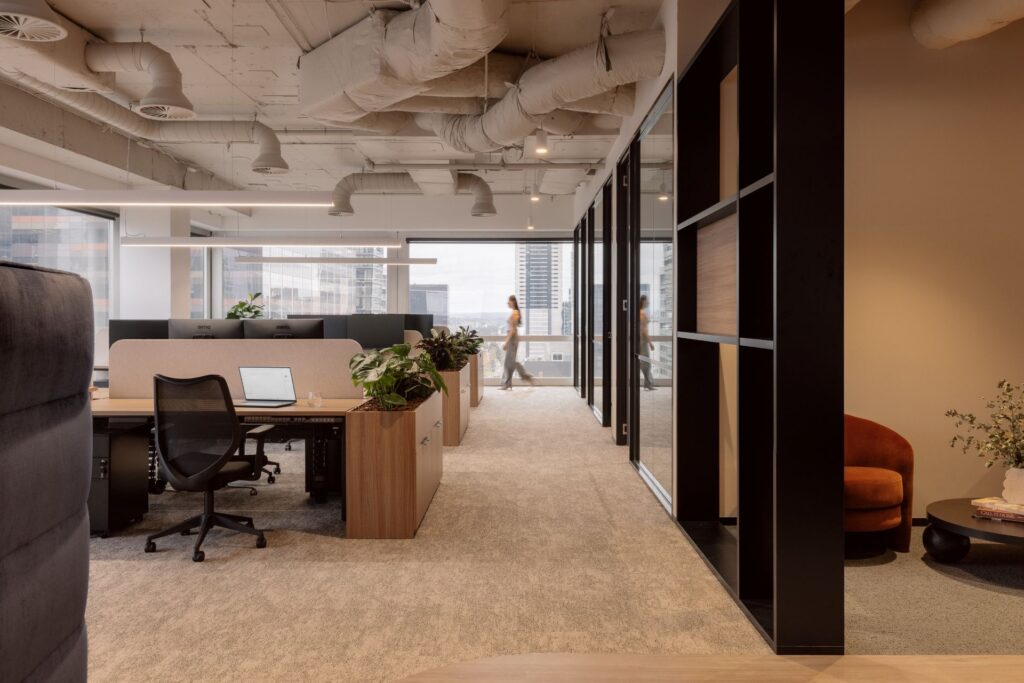
Companies seeing genuine, sustained increases in voluntary attendance share a common strategy: they changed their spaces. According to CBRE’s 2026 Global Workplace and Occupancy Insights, the number one reason employees attend the office is to collaborate (68%). The workplaces that successfully deliver on this need are intentionally designed around collaboration, not retrofitted to it. Utilisation has climbed to 53% globally, up from 38% in 2024. The workplaces driving that growth share something mandates don’t: they gave people a reason to come.
Design is one part of the equation. The other is leadership. The AFR Workplace and Workplaces Strategy Summits have brought into focus a structural tension that design alone cannot resolve. When leaders are largely absent from the office, the cultural case for being in the office collapses. Employees observe the behaviour before they read the policy. When senior people default to remote, early-career staff lose access to the informal mentorship, visibility, and career-shaping moments that proximity enables. The people most harmed by a policy-only approach tend to be the ones who would benefit most from being present, and who have the least leverage to negotiate an exception.
To solve the hybrid puzzle, organisations must look beyond mandates and focus on the two levers that drive culture; intentional workplace design and visible leadership. Afterall, people make the commute when the destination earns it.
Victoria just changed the equation, then changed the timeline
What was originally a 1 September 2026 start date for Victoria’s WFH legislation has now been delayed to 1 July 2027. Newly appointed Premier Ben Carroll pushed the date back after sustained pressure from business groups, giving organisations an extra ten months before employees gain the legal right to work from home up to two days per week, for any role that can reasonably be performed remotely.
This indicates the delay changes the deadline, not the direction of travel. The pressure that drove this legislation in the first place, on flexibility, on equal opportunity framing, on employee expectations, remains in place. Organisations now have runway to get ahead of it properly, instead of scrambling to a compliance date.
What makes this significant is where the right is being embedded. Rather than sitting within standard workplace relations legislation, it will be enshrined in the Equal Opportunity Act 2010 (Vic), Victoria’s core anti-discrimination framework. That framing positions flexible work as an equal opportunity matter, with a corresponding dispute pathway through the Victorian Equal Opportunity and Human Rights Commission and, if unresolved, VCAT.
The picture is still forming. The legislation has not yet been drafted, constitutional questions remain live (particularly given Victoria’s referral of industrial relations powers to the Commonwealth), and legal experts are actively debating its practical scope. This is a fast-moving situation.
What is already clear: the delay is a reprieve, not a reversal. Victorian workplaces and national employers seeking consistent approaches across states now have more time to build genuine strategy before the compliance layer arrives. For any organisation that has built its return strategy around policy alone, that time is worth using now, not once the deadline is real again.
The question surfaced directly at recent industry forums: if an organisation has operated a considered, well-documented flexible work policy for five years, what is the role of legislation in overriding it? It is a legitimate tension. The Victorian announcement positions WFH as an equal opportunity matter, which shifts the framing from workplace relations into anti-discrimination territory. For employers who have invested in genuine flexibility frameworks, the legislation does not necessarily create conflict, but it does create a compliance layer that requires review. For those whose policies have been informal or inconsistently applied, it creates exposure.
What makes an office worth showing up for?
Workplace strategy is how you understand your people, not just house them
This is where the conversation often gets misframed. Workplace design tends to get positioned as the end point: the fit-out, the refresh, the new layout. It is more useful when treated as the starting point.
A serious workplace transformation begins with understanding how people actually work. Not how the organisational chart suggests they should. Where does concentration happen? What are people giving up when they stay home, and what draws them back? Which teams collaborate in practice, and which collaboration is performative? What would make the commute worthwhile on a Friday?
These are workplace strategy questions. The problems organisations bring to PMG span a wide range: a lease expiring with no clear view of what comes next, leadership that hasn’t aligned on how the organisation should work, headcount projections disconnected from the current footprint, teams that have fragmented, attendance that has declined. Workplace strategy works through those conditions before any spatial decisions are made. The answers determine where investment goes, how space is zoned, and what the design is trying to solve.
Hassell and Density’s research across 1.4 million square feet of tech workplace found that moving from a fully flexible policy to a mandatory three-day hybrid policy only increased peak daily utilisation by 17 percentage points. Organisations that ground their approach in workplace strategy before making spatial decisions consistently see stronger outcomes, and design and delivery is how that strategy is realised.
The global mandate problem
There is a version of this challenge that organisations with international parent companies are actively navigating, and it is worth naming.
When a mandate arrives from a US or UK head office, applied uniformly across every region, without local consultation, without any relationship to the specific conditions of Australian markets, the friction compounds. Employees receive a directive that feels disconnected from their context, and the workplace they are being asked to return to has not been designed to justify the instruction.
The operational problem goes further. During the hybrid period, many organisations significantly reduced their physical footprint. When five-day mandates then arrived, the space was not there. Amazon delayed return-to-office across dozens of US cities because they did not have enough desks. AT&T told employees in writing there would not be one-for-one seating. JPMorgan employees reported competing for desks and arriving early just to secure a spot.
These are the consequences of treating workplace strategy and real estate strategy as separate conversations.
If a global mandate lands on a workplace that was right-sized for hybrid, the organisation faces a real problem; one that cannot be resolved by policy. Organisations with a documented, evidence-based understanding of their space and working patterns are in a far stronger position to respond: to present a data-led case to global leadership, to phase a return coherently, or to make an informed case for their specific context.
The 5 reasons people want to return-to-office
The research is reasonably consistent on this, and PMG’s project experience reinforces it.
Variety of settings.
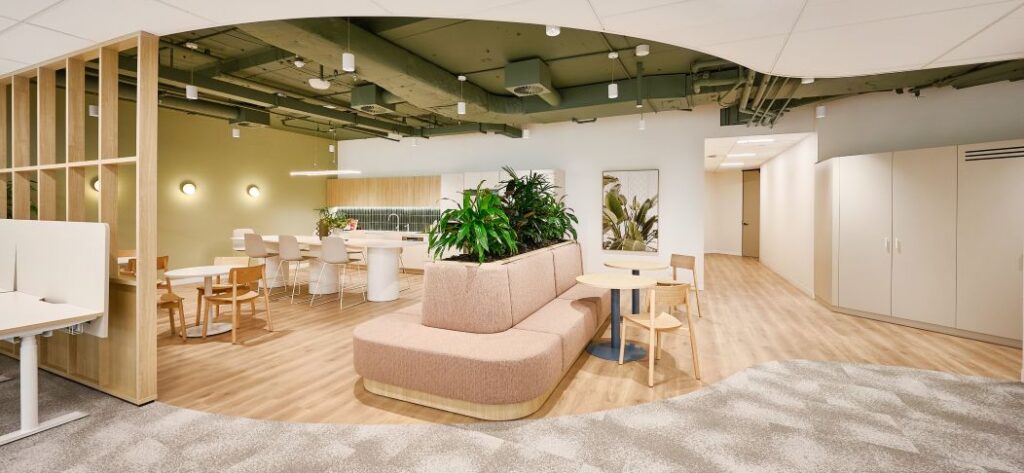
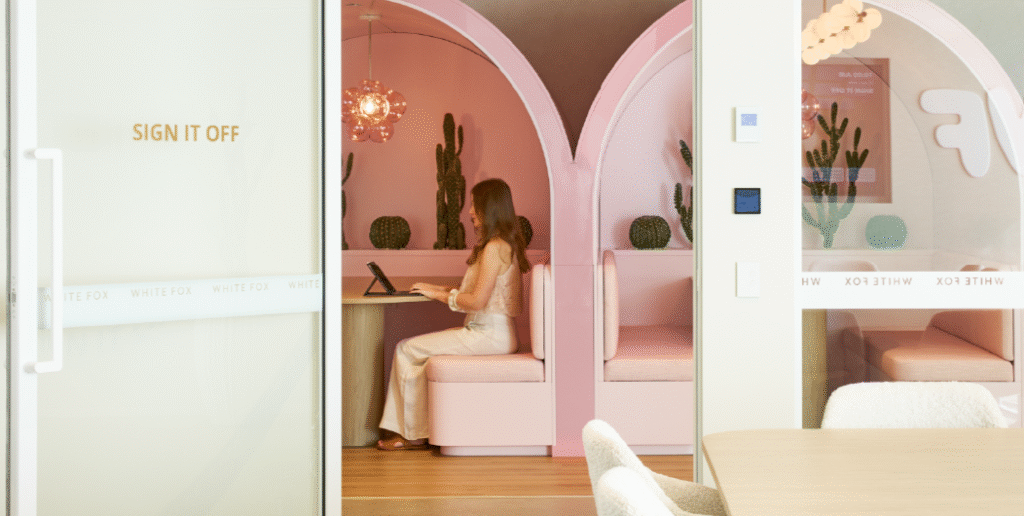
People come in for different reasons on different days; deep focus, collaboration, a difficult conversation, social connection. A single typology of space serves none of these particularly well. Workplaces with genuine variety give people a functional reason to be there, rather than asking them to work around an environment that does not fit. Variety of settings also makes an impact on productivity. Leesman’s research across 250,000 employees found that workplaces rated highly for activity-based variety scored 28 points higher on employee experience than those with low variety. Employees in high-performing workplaces were significantly more likely to report that their physical environment enabled them to work productively.
Deliberate team proximity.
People return for people, not for buildings. Design that considers team adjacencies, sight lines, and natural collision points makes the social value of being in the office real rather than theoretical. When Atlassian examined how their Sydney headquarters was actually being used, they found team spaces were used for individual focus in the morning and collaboration in the afternoon. They adjusted policy and signage to match the organic pattern rather than fight it.
Technology that removes friction.
Reliable AV, seamless connectivity, booking systems that function consistently; these are the baseline, and they are where organisations frequently underinvest relative to the physical fit-out. A technical experience worse than someone’s home setup is a fast way to lose the attendance argument.
Amenity that competes with home.
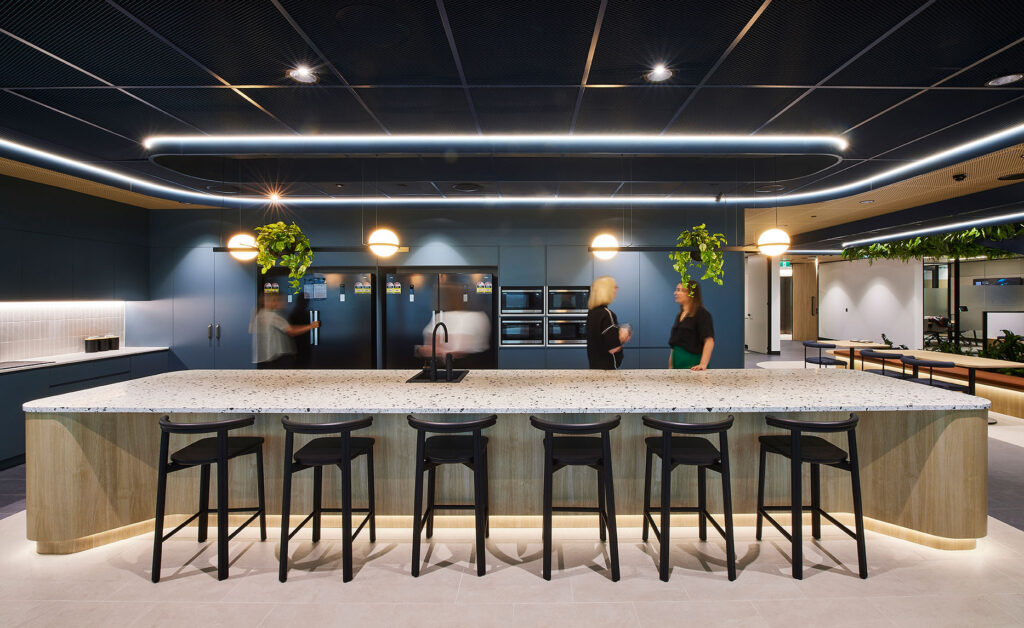
Hassell’s Mandate Mirage research found the workplaces drawing people back were functioning as genuine destinations; integrating access to good coffee, fitness, social events, and everyday convenience into working life rather than offering them as afterthoughts. The immediate environment matters too. Proximity to reliable public transport, quality food options at lunch, and a neighbourhood that reflects the organisation’s culture all factor into whether a commute feels worthwhile. This is particularly relevant during a workplace transformation: if the physical change is significant, the surrounding precinct either supports the narrative of investment or undermines it.
A workplace that signals investment.
When an organisation invests genuinely in its space, that investment communicates something to the people who work in it. Market data from Investa shows that this capital signal directly influences employee behaviour, with premium, high-amenity CBD offices experiencing a major surge in tenant demand as companies undergo a post-pandemic “Great Office Upgrade” to meet hybrid expectations. Property Council of Australia research confirms this trend, showing that positive demand for office space remains concentrated in new, high-quality buildings with premium amenities, while low-grade secondary assets face stagnant attendance. This stark divide proves that professionals are not rejecting the office as a concept; rather, they are rejecting uninspiring environments that fail to justify the commute. When an organisation directs capital into premium spatial design, that expenditure serves as a tangible operational signal that transforms the office from a place of forced compliance into a high-value destination.
Design is the catalyst for your return-to-office strategy
The return-to-office conversation is far from settled. Victorian legislation adds a new layer of complexity, global mandates will continue to create pressure in both directions, and the research will keep accumulating.
What the research consistently supports is that organisations with workplaces designed around a genuine understanding of their people, and with leadership that visibly models the behaviour they expect, are better positioned across every scenario: voluntary return, legislative change, global mandate, or sudden shift in business strategy.
The organisations making real progress are aligning physical investment with executive behaviour, and treating both as part of the same strategy.
PMG has spent 30 years delivering workplace transformations across Australia. The process begins with understanding your people and your organisation and that understanding shapes everything that follows.