
Diversity and Inclusion in the Workplace: Designing for Human Difference
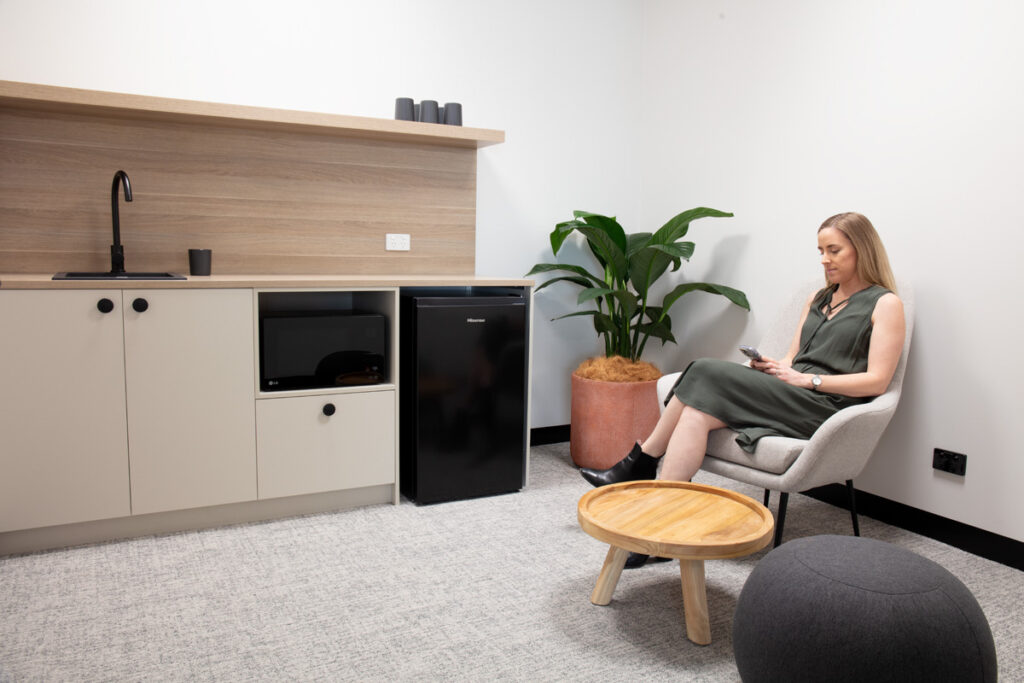
A workplace can be technically accessible and still leave people feeling uncomfortable, distracted or excluded. The difference often sits in the details: the intensity of the lighting, the noise travelling across a floorplate, the lack of somewhere quiet to concentrate, or simply the assumption that everyone experiences space in the same way.
For organisations serious about diversity and inclusion in the workplace, those details matter. They shape how people experience their working day, and they reveal whether inclusion has been considered as part of the workplace itself.
What is diversity and inclusion in the workplace?
Diversity describes the mix of people within an organisation, including differences in social and professional identity. The Diversity Council Australia defines inclusion through whether people feel respected, connected, able to contribute their perspectives and able to progress with equitable access to opportunities and resources.
The workplace has a role in creating the conditions for that experience. At PMG, workplace strategy starts with understanding how people use and experience space before design decisions are made. Our workplace strategy approach uses people, behavioural and spatial insights to establish a clearer evidence base for workplace decisions.
That matters because inclusion cannot be designed from a generic floor plan. People have different sensory thresholds, working preferences, physical requirements and expectations of privacy. The more variation an organisation contains, the more important it becomes to create environments that offer meaningful choice.
The question then becomes more specific: how can a workplace accommodate difference without turning inclusion into a collection of specialist spaces?
Ready to design a workplace that works for the different ways your people experience it?
Inclusive office design starts with choice
One of the most useful shifts in workplace design is moving away from the idea of a single ideal working environment. A productive workplace needs enough variation for people to find the conditions that support their task and their individual needs.
This is particularly relevant when considering neurodiversity and work. Research and industry guidance increasingly recognise that sensory inputs such as light, acoustics, layout, visual information, temperature and odour can affect people in very different ways. British Standards Institution (BSI)’s PAS 6463:2022 provides guidance for designing built environments around sensory and neurological differences, covering considerations including lighting, acoustics, décor, flooring, layout, wayfinding, clarity, thermal comfort and odour.
In a recent CoreNet conference, a discussion explored workplace experience through eight sensory stimuli, recognising that hypersensitivity and hyposensitivity can create very different experiences of that same environment. It also highlighted practical principles including clarity, transitions, visibility and crowding, lighting, materiality, geometry, pattern and scent.
This makes inclusive office design less about creating a dedicated solution for a particular group and more about creating an environment with enough flexibility for people to regulate their own experience.
The sensory workplace is part of the inclusion conversation
Consider a typical open workplace. Someone may find the background conversation energising; another person may struggle to concentrate. One employee may seek daylight and visual connection, while another needs a lower-stimulation setting to work effectively. Neither experience is inherently right or wrong.
Cushman & Wakefield’s 2025 research into workplace experience places neurodiverse enablement and sensory considerations alongside flexible spaces, behavioural and cultural cues, and technology as components of a meaningful workplace experience. Its research also found a gap between employees feeling able to do their best work and rating their wellbeing highly, suggesting that performance and experience cannot be treated as separate considerations.
The implications reach beyond neurodiversity. A quieter room can support someone managing sensory overload, while also becoming valuable for focused work or an important conversation. Adjustable lighting can accommodate different sensory preferences, while also supporting different tasks throughout the day.
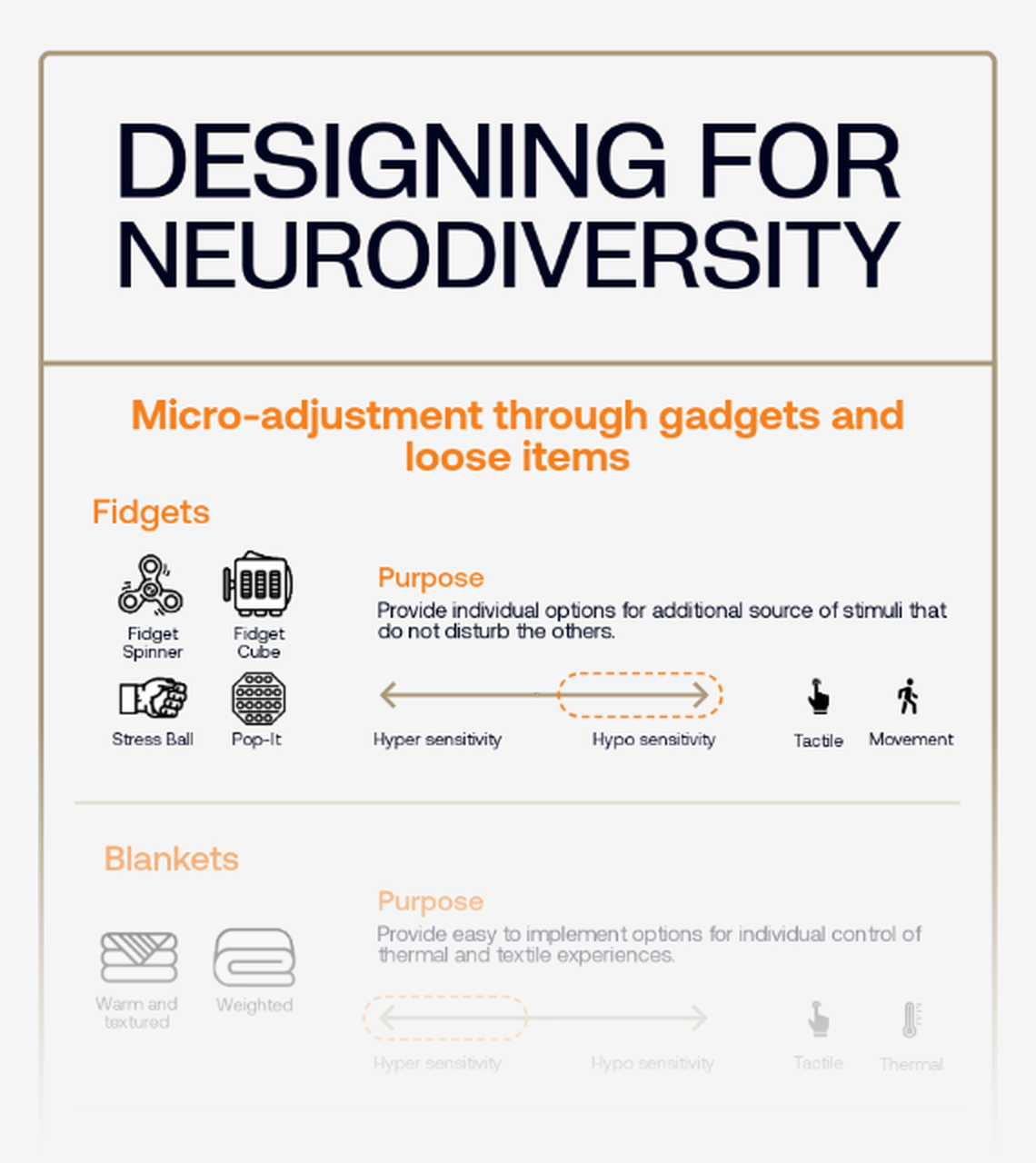
The CoreNet session captured this through the idea of micro-adjustments and personal zones. Measuring environmental exposure from the perspective of the individual, recognising that the experience of a workplace is personal as well as spatial.
See how small adjustments shape a neuroinclusive workplace →
Our infographic covers personal tools, partitions, quiet zones and wellness rooms, showing which sensory needs each one supports.
When inclusive design becomes tokenism
There is a risk in treating inclusion as a collection of physical interventions. A quiet room, sensory space or adjustable workstation can be valuable, but its presence alone does not make a workplace inclusive. If people feel uncomfortable using it, do not understand why it exists, or worry that stepping away from the open workplace will draw attention to them, a well-intentioned space can remain largely unused.
This is particularly relevant when designing for neurodiversity and work. People experience sensory environments differently, and many employees may choose not to disclose their needs. The reasons can be personal, cultural or organisational, and a workplace that makes difference feel conspicuous can create another barrier to participation.
Inclusive office design therefore needs to preserve choice and dignity. A person should be able to move to a quieter setting because they need to concentrate, because they are taking a sensitive call, or simply because it suits the work they are doing. When different spatial settings are part of everyday workplace use, individual adjustments become less visible and more normal.
The same principle applies to the wider workplace. Inclusion is strengthened when people have meaningful control over aspects of their environment, with spaces that accommodate different levels of stimulation, interaction and privacy.
A workplace can support psychological safety
The physical environment also sits within a much bigger cultural picture. An organisation can provide choice, flexibility and carefully considered spaces, yet employees still need to feel comfortable using them.
Psychological safety is relevant here because inclusive workplaces depend on people feeling able to express their needs without fear of judgement. For someone who finds a busy environment overwhelming, asking to work somewhere quieter should feel like a reasonable workplace choice. For someone with different sensory or cognitive needs, making an adjustment should not require them to repeatedly justify why they need it.
Leadership has an important role in establishing those conditions. When managers recognise different working preferences, encourage people to use the workplace in ways that support their work, and treat adjustments as a normal part of working life, the physical environment has a better chance of delivering its intended experience.
This is where the conversation around diversity and inclusion in the workplace becomes broader than design. Space can create the opportunity for inclusion; culture determines how confidently people can use that opportunity.
Designing workplaces that accommodate difference
Diversity and inclusion in the workplace becomes meaningful when the built environment acknowledges that people experience the same space differently.
For PMG, that begins with evidence. Understanding how people behave, where they concentrate, how they collaborate and what environmental conditions support them creates a stronger foundation for design. From there, inclusive workplace design can introduce variation, choice and control without compromising the coherence of the overall environment.
The result is a workplace that can support more people, more ways of working and more individual experiences across its life. That is a more enduring measure of workplace quality; one that recognises the people using the space as carefully as the space itself.
Frequently Asked Questions
What is a diversity and inclusion strategy?
A diversity and inclusion strategy combines diversity actions, such as representation targets, inclusive hiring and progression policy, with inclusion actions that address whether people feel respected, connected, contributing and progressing once they’re part of the organisation.
What is an inclusive workplace?
An inclusive workplace is one where a diverse range of people feel respected, connected to colleagues, able to contribute and able to progress, supported by both organisational culture and physical design choices such as sensory comfort and spatial variety.
What is neuroinclusive design?
Neuroinclusive design applies principles including clarity, predictable transitions, controlled visibility, adjustable lighting, considered material patterns and scent management to support the sensory needs of neurodivergent employees, guided in part by the British Standards Institution’s PAS 6463:2022.
How do you measure employee wellbeing in the workplace?
Employee wellbeing is commonly measured through engagement surveys, retention and absenteeism data, and inclusion metrics such as DCA’s Inclusion@Work Index, which track whether people feel respected, connected, contributing and progressing over time.