Your office swipe card data tells a story you might not want to hear; one that explains why commercial real estate decisions have become so complicated.
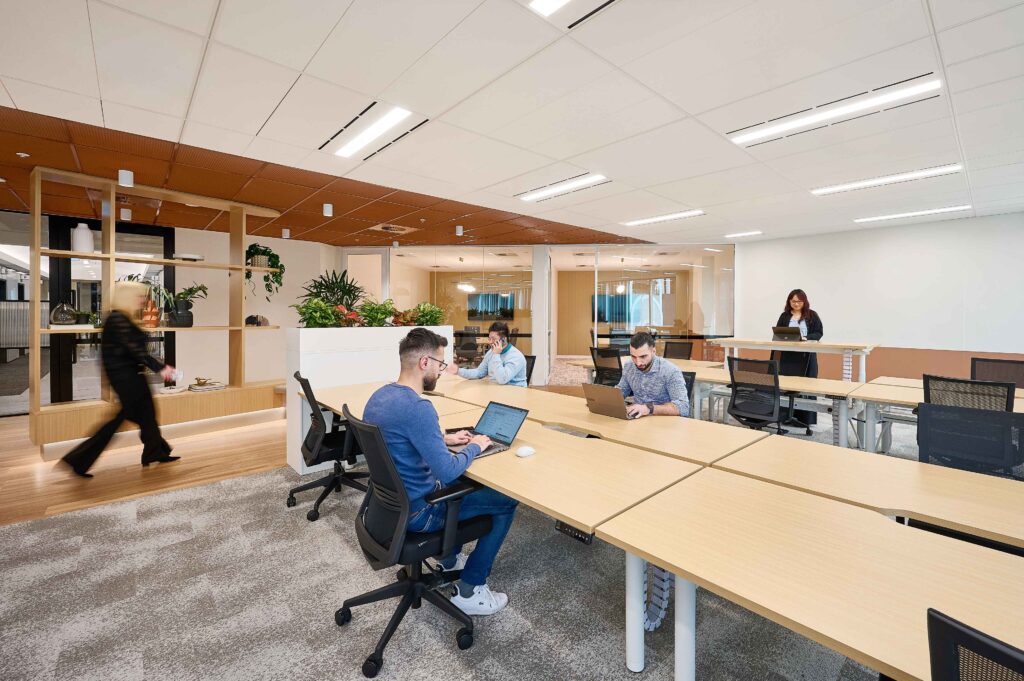
Despite return-to-office mandates and hybrid policies, desks remain empty three days a week, leaving organisations questioning their space investments and contributing to the 45% increase in commercial leasing deal completion times. Departments operate as isolated islands, with marketing barely speaking to sales, and finance existing in its own universe. This fragmentation makes it nearly impossible for leadership to make confident workspace decisions, adding to the internal decision-making delays that 36% of commercial real estate professionals cite as a major challenge.
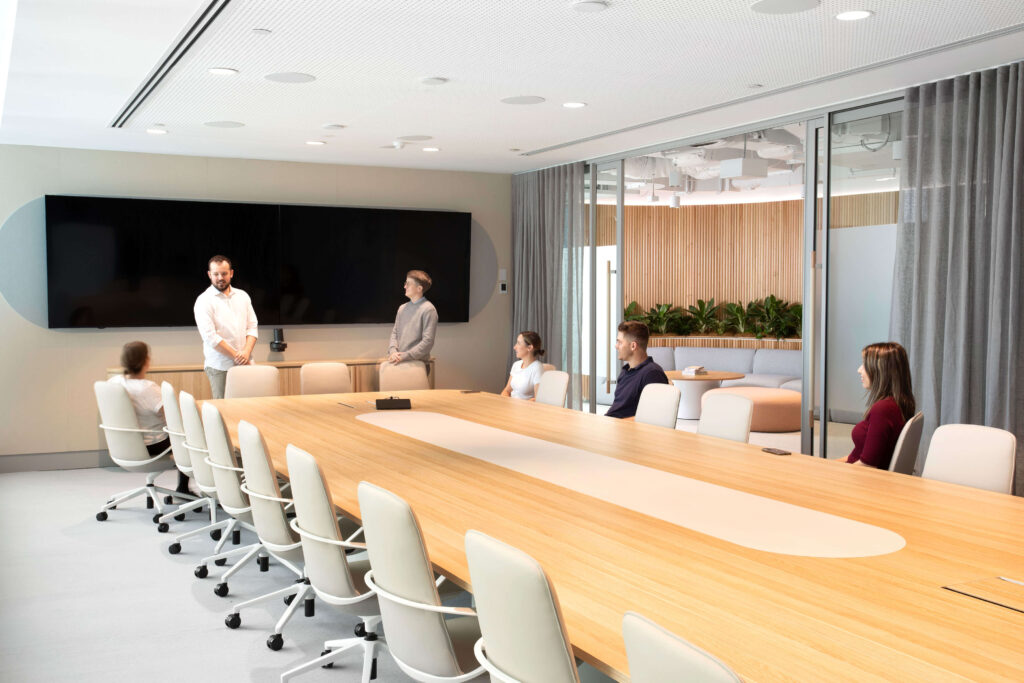
Meanwhile, your expensive meeting rooms sit booked but underutilised, with impromptu conversations that once sparked innovation a thing of the past. This disconnect between workspace reality and workspace planning helps explain why 51% of commercial real estate professionals identify budget constraints as their clients’ biggest challenge; when you can’t accurately predict how space will actually be used, every square metre becomes a financial risk.
These aren’t isolated incidents; they’re symptoms of a fundamental misalignment between how your space is designed and how your people actually work.
Most organisations now require 3 to 6 months to evaluate their space investments, carefully weighing decisions that once seemed straightforward against the uncertain patterns of hybrid work.
The Hidden Costs of Traditional Thinking
The assumption that open plan office configurations automatically foster collaboration has proven costly. Research consistently demonstrates that removing physical barriers often increases digital communication whilst reducing face to face interaction. The assumption that collaboration happens exclusively in meeting rooms overlooks the organic conversations that occur in transitional spaces, breakout areas, and even near the coffee machine.
Industry data supports this complexity: whilst 38% of commercial real estate professionals identify collaborative zones and meeting rooms as the most attractive feature to tenants, 28% report that tenant decisions are “all budget driven,” revealing the tension between fit-for-purpose functionality that enhances productivity, design aspirations and financial realities.
Department silos aren’t just cultural problems; they’re often reinforced by physical separation. When teams can’t see or easily access each other, informal knowledge sharing diminishes, project handoffs become cumbersome, and company culture fragments.
Effective office neighbourhoods mirror successful urban planning principles. Just as thriving city districts balance residential, commercial, and recreational spaces, productive office neighbourhoods integrate focused work areas, collaborative zones, social spaces, and support functions.
The concept moves beyond departmental clustering towards activity based working environments. Instead of “the sales floor” and “the marketing department,” consider “innovation districts” where creative collaboration thrives, “focus quarters” for deep work, and “connection hubs” for informal interaction.
Uncovering How Your People Really Work
Before redesigning spaces, you need data about actual work patterns, not assumptions about ideal ones. This involves multiple discovery methods.
Space utilisation analysis reveals which areas are consistently overcrowded, underused, or misused. Workflow mapping identifies how different roles move through their day and where friction occurs. Department interaction analysis shows which teams need proximity and which benefit from separation.
Employee insights through surveys and focus groups uncover the gaps between intended space function and real user experience. These insights must be balanced against strategic objectives. During this engagement process, it’s critical to explore perceptions, insights and disparities between leadership, management and the broader employee base to ensure all perspectives are understood.
The Neighbourhood Framework
Successful office neighbourhoods require six distinct zones working in harmony:
- Immerse spaces provide distraction free environments for focused individual work.
- Spark zones facilitate creative collaboration and innovation.
- Gather areas encourage informal social interaction and community building.
- Connect spaces support formal meetings and presentations.
- Support zones house essential services and wellness facilities.
- Circulate areas become active spaces for chance encounters rather than mere corridors.
The magic happens in the transitions between these zones and their strategic positioning relative to each other.
From Insights to Action
Begin with a comprehensive workplace feasibility that examines current space utilisation, behaviours and employee activities. Key questions should explore work style preferences, collaboration patterns, productivity challenges, and space satisfaction levels.
The current market reality reinforces this approach: with 39% of commercial real estate professionals expecting bespoke leasing terms to shape the market over the next 12 months, customised workplace solutions based on actual employee data become essential. Extended decision timelines (79% of deals taking 3+ months to complete) provide the necessary time for thorough feasibility and analysis.
Consider exploring:
- Peak productivity times and preferred work environments
- Frequency and nature of collaboration needs
- Current space frustrations and improvement suggestions
- Remote work preferences and drivers
- Informal interaction opportunities
This data forms the foundation for evidence-based workplace decisions rather than design trends or executive preferences, particularly important when 51% of organisations face budget constraints that demand strategic value demonstration.
Measuring Success
True neighbourhood success extends beyond traditional facilities metrics. Monitor collaboration frequency between previously siloed departments, track innovation project outcomes, and measure employee satisfaction scores. Space utilisation should improve, but more importantly, the quality of work and workplace relationships should enhance. Research has proven that highly engaged employees lead to significant performance boosts: 23% higher profitability and 18% higher productivity, according to Gallup.
Regular pulse surveys help maintain alignment between space function and evolving work patterns, ensuring your office neighbourhoods remain dynamic and responsive to changing needs.
The journey from problem recognition to actionable insights requires systematic investigation and evidence-based assessments. Your next step is gathering the data that will transform your empty desks into thriving workplace neighbourhoods.