Places Made for Generations: The Commitment Behind PMG's Next Chapter
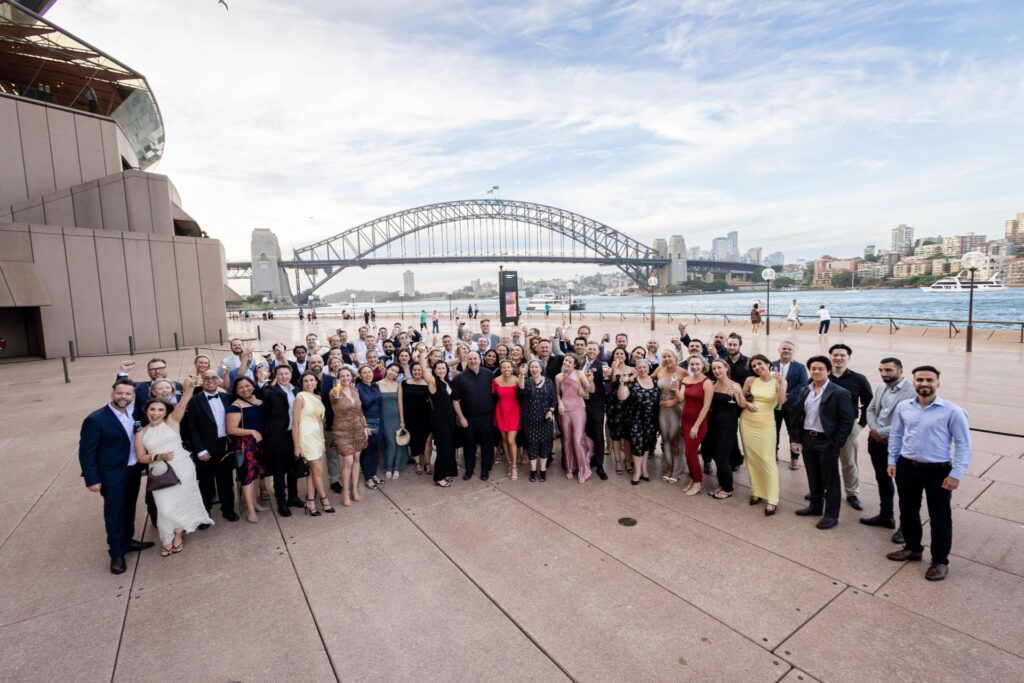
Thirty years ago, PMG was founded on a straightforward belief: that the places people work in shape how organisations perform, how people feel, and how long a space can genuinely serve the people inside it.
A lot has changed in three decades. The nature of work has shifted beyond recognition. The workforce has diversified across generations in ways no single brief can easily contain. The environmental stakes of how we build and rebuild have become impossible to ignore. And the gap between what most workplaces deliver and what organisations need has quietly widened.
PMG’s rebrand is not a cosmetic exercise. It is the outward expression of a commitment the business has spent thirty years developing and is now ready to name directly.
That commitment is this: Places Made for Generations.
It is worth explaining what that phrase actually demands, because it runs deeper than a tagline. It is a position on how workplaces should be defined, designed, and delivered. One that rejects the short-term thinking that has come to define this industry. And one that starts from a belief that the best workplaces are not just built for right now, but also for what comes after.
Places Made for Durability and Longevity
Quality and durability are not premium add-ons reserved for organisations with larger budgets. At PMG, they are the baseline from which every project starts.
We believe true value is found in the years a workplace stays functional without requiring further capital expenditure. PMG designs with longevity in mind ensuring material selections hold their performance and their presentation across years of use. And when necessary, we recycle waste and work with circular economy partners to rehome and repurpose to counter.
Places Made Sustainably and Future Proofed
Building for future generations means ensuring the environment those generations inherit is worth working in.
PMG holds ISO 14001 accreditation, the internationally recognised standard for environmental management systems. But the accreditation did not change how we operate. It confirmed what has always been true.
ISO 14001 requires an organisation to identify and systematically manage the environmental impact of everything it does, in aspiration and in practice, measured, audited, and independently verified. For a business that works in the built environment, this commitment is a necessity.
Every unnecessary strip-out sends materials to landfill that could have remained in service for another decade. And every poorly planned fitout that ends in a skip bin is a failure of foresight.
Future proofing, in this context, is a responsibility embedded in the way PMG operates. Designing for flexibility and building workplaces that last longer, waste less, and close the loop on materials at end of life is how PMG contributes to a built environment the next generation can work within.
Places Made for the Multigenerational Workforce
Picture two people sharing the same office floor right now. One is 22, fresh out of university, navigating their first professional environment. The other is 65, at the peak of a decades-long career. Their expectations of work, their preferred ways of collaborating, their tolerance for noise, their need for privacy and visibility; these are not the same. Neither is wrong. Both are your workforce.
The reality is; for the first time in recorded history, Australian workplaces are home to up to five generations simultaneously.
The Australian Public Service Commission helps explain the multigenerational workforce condition further. Traditionalists and Baby Boomers remain employed longer, supported by flexible arrangements and longer healthy lifespans. Generation Z is entering the workforce earlier and in greater numbers.
The implications for workplace design are profound. Older workers consistently report that interesting work and flexibility are their primary drivers. While younger cohorts prioritise purpose, growth pathways, and digital fluency in their environments.
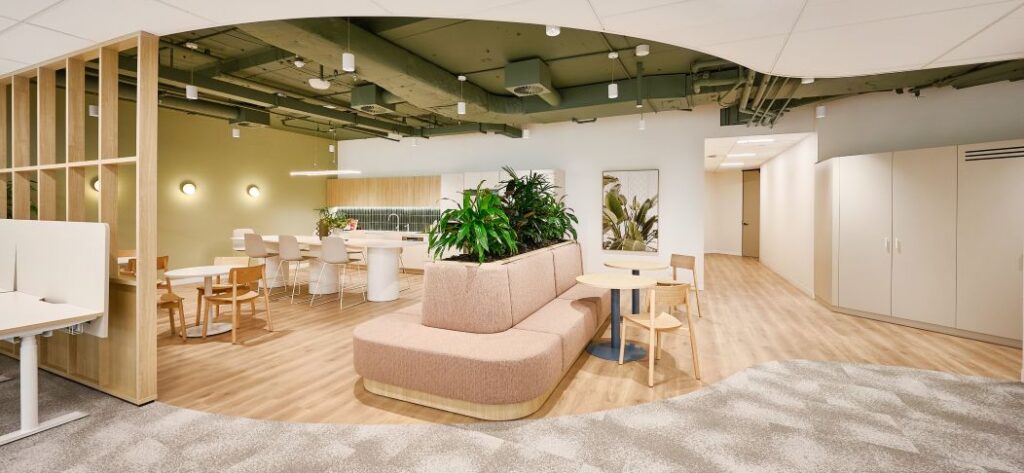
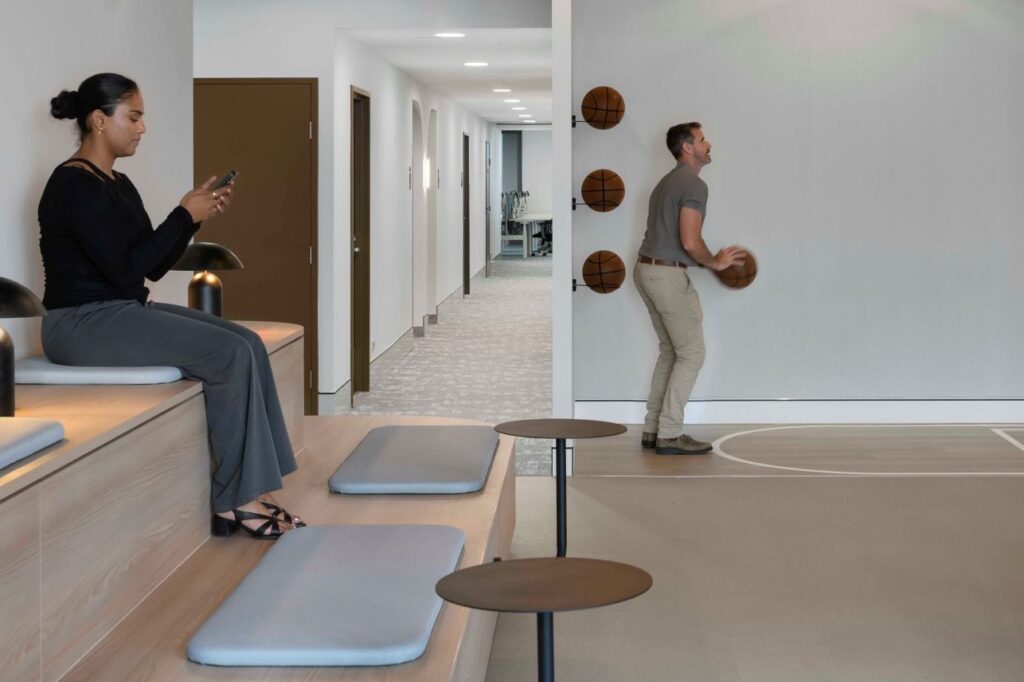
Places Made for Generations begins here. Designs are developed with this complexity at the centre. Spaces can move fluidly between collaboration and concentration, between formal meeting and informal exchange and between the needs of someone early in their career and someone at the peak of theirs.
We recognise that a workplace that only works for part of your workforce driven by senior leaders in isolation is already failing.
Places Made for Multiple Leasing Cycles
If workplace briefs are written for the current situation, right now, the team is 80 people, hybrid means three days in and the fit-out budget is what it is. This is understandable. Decisions need a basis, and the present is the easiest one to anchor to.
The problem is that workplaces are not right-now assets. They are signed for five, ten, sometimes fifteen years. The people who will occupy them in year eight have not been hired yet. The ways of working that will define them in year five are not fully formed. Building for now, in a space that must serve future requirements, is the core failure this industry keeps repeating.
PMG works with landlords to deliver speculative suites; fitted, ready-to-occupy spaces designed and built before a specific tenant is known. In lesser hands, a speculative suite becomes a disposable product: a space fitted to a generic brief, occupied for one lease cycle, designed and delivered in a restrictive budget, and then stripped back to base building for the next tenant to start again due to lack of flexibility and quality.
A space that only works for one tenant is not a well-designed space.
PMG approaches speculative delivery with the intent of durability, adaptability, and quality from the outset. The materials specified are selected to perform across multiple tenancy cycles without full replacement. Layouts are designed to accommodate a range of occupier types and configurations. The result is a suite that retains its performance and its presentation across multiple tenants, multiple leases, and multiple years, without the environmental and commercial cost of a complete rebuild each time a lease ends.
For the landlord, this creates a superior commercial model where the asset generates returns across its entire lifecycle through the investment that delivers asset outcomes.
Places Made for Growth and Change
The moment a workplace is complete, the organisation it serves has already started to change.
People leave. People are hired. Teams are restructured. Strategies shift. A workplace designed to reflect the organisation at a single point in time begins to drift from relevance almost immediately. Most refurbishment briefs treat this as an inevitable cost. PMG treats it as a design challenge demanding a strategic solution.
Tenant refurbishments delivered by PMG are built on a long view of how organisations evolve. That means designing for headcount ranges rather than fixed headcounts. It means building in genuine adaptability through smart layout planning, infrastructure flexibility, and material choices that accommodate change without requiring demolition.
It also means understanding that a workplace is not a finished artefact; it is a platform that should remain capable of serving the organisation through growth, contraction, cultural evolution, and workforce turnover.
The New Standard
The standard the industry has normalised is not good enough.
Short lease thinking has produced short-lived spaces. Trend-driven design has produced workplaces that age poorly and are discarded quickly. The environmental cost of this cycle is significant. The commercial cost is substantial. The human cost, in terms of spaces that fail to genuinely serve the people working inside them, is largely invisible but entirely real.
Places Made for Generations is PMG’s rejection of that standard. It is a commitment that operates at every level: in how spaces are designed to serve a multigenerational workforce, in how they are built to endure beyond a single lease, in how environmental responsibility shapes every material decision, and in how refurbishments are delivered with an eye on where the organisation is going, not just where it is today.