How Your Workplace Shapes Your People
- Tica Masuku
How Your Workplace Shapes People, Performance, and Purpose
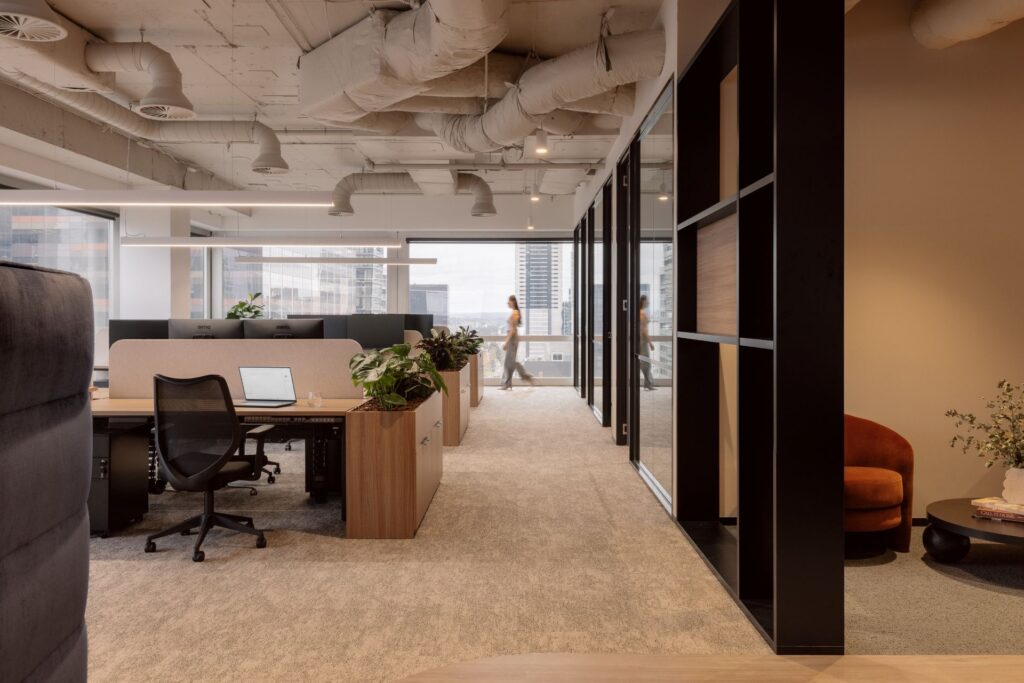
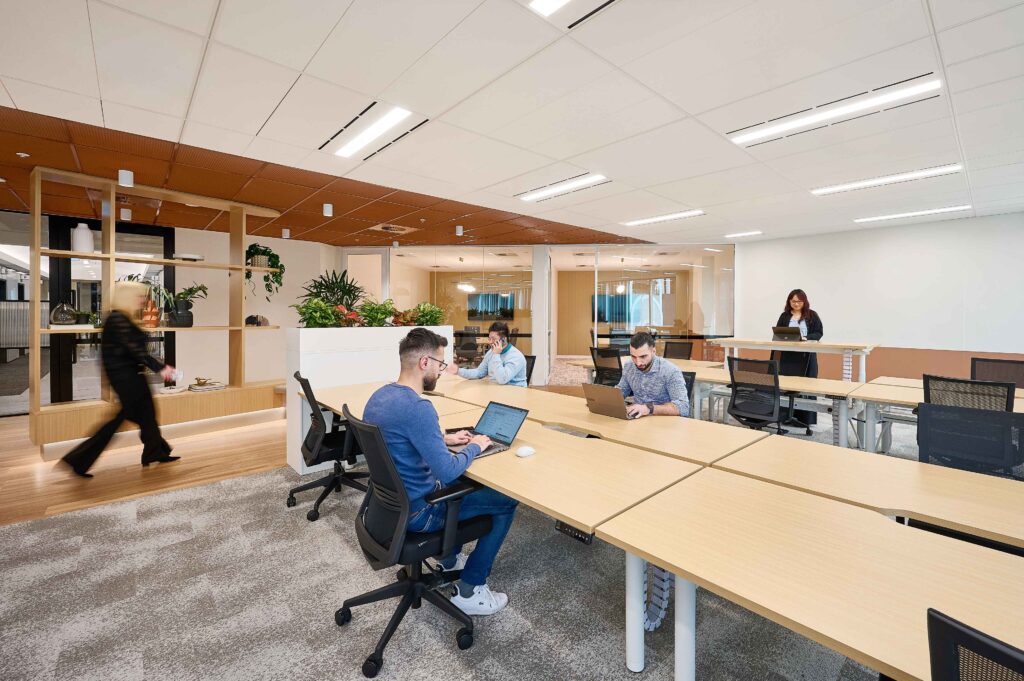
Every Monday morning, Sarah walks into her office. Natural light floods through floor-to-ceiling windows, colleagues greet each other in the open collaboration zone, and she settles into a quiet focus booth for deep work. By 10am, she’s accomplished more than she used to by lunchtime in her old office, a grey cubicle farm where she felt isolated and uninspired.
Sarah’s story illustrates a fundamental truth many business leaders overlook: workplace design isn’t just about square metres and furniture. It’s about shaping human experience, which in turn drives organisational outcomes.
The Hidden Cost of Getting It Wrong
Before exploring what great workplace design achieves, consider what happens when organisations get it wrong. Harvard researchers studied two Fortune 500 companies that transitioned from cubicles to open plan offices, expecting increased collaboration. Instead, face to face interactions dropped by approximately 70%, whilst email and instant messaging increased by 20% to 50%. Company executives reported that productivity had declined after the redesign as employees socially withdrew, using headphones and digital communication to recreate the privacy boundaries that had been removed.
The workplace had shaped behaviour, but not the behaviour they intended. Instead of collaboration, they’d created chaos. Instead of belonging, they’d fostered frustration.
Your workplace is already shaping your people’s experience, the question is whether it’s shaping it intentionally or accidentally.
When workplace design causes employees to socially withdraw, productivity plummets. How resilient is your current office ecosystem against these hidden costs? Move from accidental design to an intentional performance framework. Download our Culture of Health Whitepaper to access our 6-question self-audit tool built for executive leadership. Download the Whitepaper Here
The Three Pillars: People, Purpose, Performance
The most successful organisations understand that workplace design operates through three interconnected pillars, each influencing the others in a continuous feedback loop.
People and Behaviour: The Two-Way Street
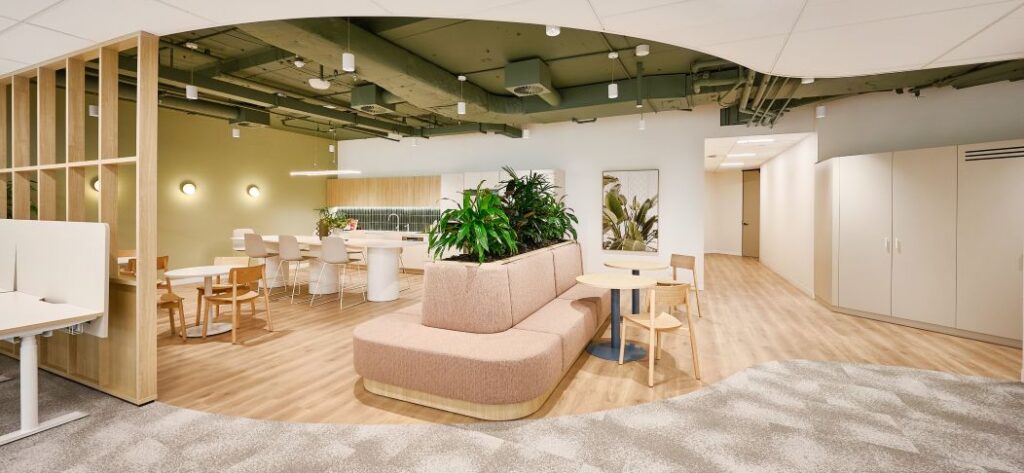
When people enter a workplace, the environment immediately shapes their behaviour. A closed door says “do not disturb.” An open kitchen says “gather here.” Hot desks say “you’re flexible.”
But the relationship flows both ways. As people adapt to the space, they also reshape it through use. That informal meeting spot by the coffee machine? It wasn’t designed as a collaboration zone, but your people’s behaviour has transformed it into one.
Atlassian’s Sydney headquarters created diverse work settings, from quiet libraries to standing meeting spaces, then observed how people actually used them. They discovered “team spaces” were used for focused individual work during mornings and collaborative sessions in afternoons. Rather than fighting this organic behaviour, they adjusted policies and signage to support these natural rhythms.
The lesson? Effective workplace design isn’t about controlling behaviour; it’s about understanding it, then creating environments that enable the behaviours your organisation needs to thrive.
Purpose and Belonging: Where Mission Meets Space
A well designed workplace doesn’t just house your company’s purpose, it embodies it. When people experience their organisation’s values reflected in and supported by their physical environment, it enables them to further develop a sense of belonging.
Take Patagonia’s headquarters in Ventura, California. Their environmental commitment isn’t just in their mission statement; it’s in every recycled material, every solar panel, every bike rack. Employees don’t just work for an environmental company, they experience that commitment daily. This tangible expression of purpose drives exceptional retention rates.
When your workplace strengthens organisational purpose, it fosters belonging. When people feel they belong, they connect with their own sense of individual purpose. And when personal purpose aligns with organisational purpose, you’ve created the conditions for genuine engagement.
The crucial insight: this only works when workplace design genuinely reflects your organisation’s actual purpose, not an aspirational version. Authenticity matters. Your people will immediately sense the difference.
The Critical Requirement: Understanding Before Designing
The biggest mistake organisations make is designing workplaces based on assumptions rather than understanding.
Your workplace requirements are as unique as your organisational DNA. A creative agency needs different spaces than an accounting firm. A rapidly scaling startup has different needs than an established enterprise.
Before making any workplace decisions, you must understand:
- How your people actually work (not how you think they work)
- What behaviours your organisational strategy requires
- Where your people find energy, focus, and connection
- What’s preventing optimal performance in your current environment
- How your physical space can authentically express your purpose
This requires asking questions, observing patterns, and testing assumptions. It means involving your people in the design process.
From Insight to Action
The organisations that unlock the full value of place treat workplace design as a strategic investment in human experience and organisational performance.
The path forward starts with understanding. You need a systematic way to assess your organisation’s unique workplace requirements, one that captures how your people work, what drives their performance, and how your environment currently supports or hinders your purpose.
Your Next Step: Partner With Workplace Strategy Experts
Understanding your organisation’s unique workplace requirements demands specialist expertise. It requires the ability to interpret behavioural patterns, decode organisational culture, and translate insights into actionable design strategy.
Our Workplace Experience Diagnostic assesses three critical dimensions:
- Behavioural Mapping: We observe and analyse how your people actually use space, identifying patterns in collaboration, focus work, and environmental influences that impact effectiveness
- Purpose Alignment Audit: We evaluate the gap between your stated organisational values and what your current workplace communicates, revealing opportunities to authentically embody your purpose
- Performance Environment Assessment: We identify the specific environmental factors that enhance or inhibit individual and team performance in your unique context
This expert-led diagnostic creates the foundation for workplace design decisions that solve your real challenges, not generic ones. We transform your workplace from a cost centre into a strategic asset that drives culture, engagement, and performance.
The question isn’t whether your workplace is shaping your people. It’s whether you’re ready to shape it intentionally.